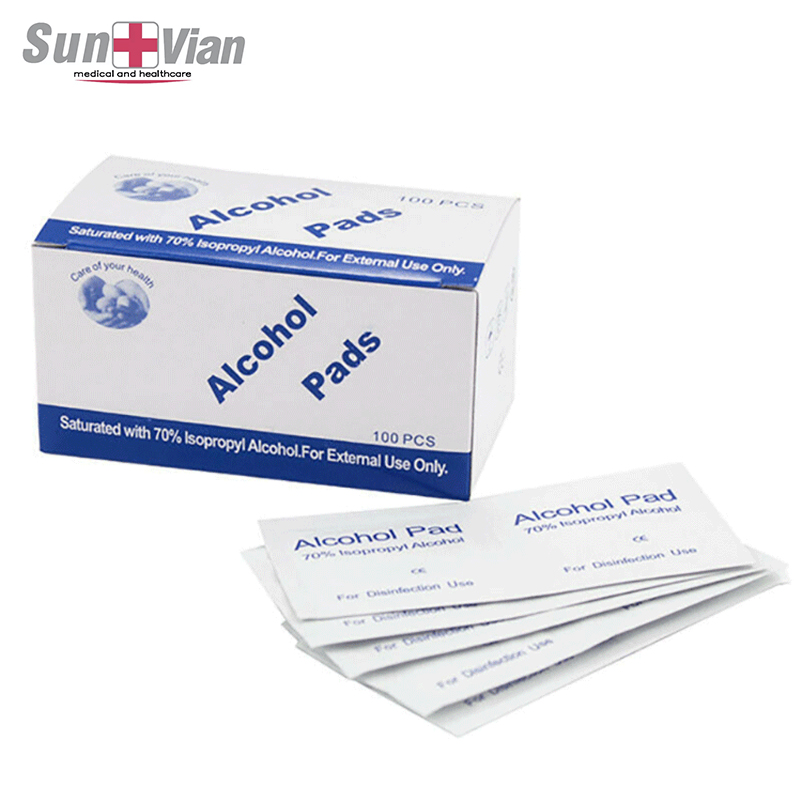
What CE Certification Means for Alcohol Pads
CE marking requirements under EU MDR for sterile medical devices
Getting CE certified means meeting all the strict rules set out by the EU's Medical Device Regulation (MDR) for sterile medical products like alcohol pads. The regulations require manufacturers to show proper sterilization methods have been validated through processes such as gamma irradiation or ethylene oxide treatment. Packaging needs to maintain its microbial barrier integrity too. And don't forget about biocompatibility testing according to ISO 10993 standards. Companies also need to put in place a quality management system that gets checked regularly by an EU-approved notified body. Plus they must keep detailed technical files that prove everything complies with regulations. If any of these boxes aren't ticked properly, getting into the European market becomes impossible. Worse still, non-compliance can lead to serious consequences ranging from hefty fines right up to having products pulled off shelves entirely.
How CE certification validates sterility, biocompatibility, and performance of CE alcohol pad
CE certification verifies three interdependent pillars of safety and efficacy:
- Sterility assurance, confirmed through ISO 11737-compliant microbial testing and validated sterilization cycles.
- Biocompatibility, assessed per ISO 10993-5 and -10 to ensure no skin sensitization or cytotoxicity from pad materials or residual alcohol.
- Performance validation, including precise alcohol concentration (typically 70% isopropyl alcohol—aligned with WHO and CDC guidance) and verified contact time efficacy against clinically relevant pathogens such as Staphylococcus aureus, Pseudomonas aeruginosa, and enveloped viruses.
This end-to-end validation—from raw material sourcing to final packaging—provides auditable evidence that CE alcohol pad delivers consistent, reliable infection control. Clinical data indicate CE-certified alcohol pads achieve ≥99.9% reduction in surface bioburden when used as directed—significantly outperforming non-certified alternatives lacking standardized testing.
CE Alcohol Pad vs. Non-Certified Alternatives: Key Compliance Risks
When hospitals and clinics use alcohol pads without CE marking, they're stepping into a minefield of problems that go beyond paperwork. These items aren't subject to EU Medical Device Regulation requirements at all basically skipping through the entire approval process including those important audits by notified bodies, technical documentation checks, and ongoing market monitoring. What happens next? The sterility guarantees on these products are basically guesswork. Their labels don't include necessary tracking information either, making it impossible to trace where they came from if something goes wrong. And worst of all, there's no independent verification that their manufacturing meets basic safety standards. Real world consequences include getting hit with fines from regulators, sudden shortages when suppliers can't prove compliance, and much higher legal risks whenever patients develop infections after procedures involving these questionable products.
Gaps in sterility assurance, labeling, and traceability without CE marking
Non-certified alcohol pads lack the documented controls required under Article 10 of the EU MDR:
- Sterility Assurance: Absence of ISO 11737-compliant testing and sterilization process validation. A 2023 clinical audit found non-CE pads exhibited 15% higher microbial contamination rates than CE-certified equivalents.
- Labeling Compliance: Missing UDI (Unique Device Identification) codes, sterilization method, expiry date, and manufacturer traceability—factors linked to a 22% rise in misuse incidents (EMA 2023).
- Traceability Systems: Over 60% of non-compliant suppliers lack digital batch tracking, impeding rapid recall execution during outbreak investigations.
These gaps undermine patient safety and violate core MDR obligations. CE alcohol pads mitigate these risks by enforcing ISO 13485-aligned quality systems across the entire lifecycle—from design and manufacturing to distribution and post-market monitoring.
Alignment with Global Infection Control Standards (CDC, WHO, ISO)
Alcohol pads with CE certification aren't just made to fit international infection control standards as an afterthought either they're designed that way from the start. The whole process of making these products follows guidelines set out by major health bodies like CDC, WHO, and ISO standards. When hospitals and clinics use them, staff automatically comply with European Union regulations while also sticking to what's considered best practice worldwide for preventing those nasty hospital acquired infections. Basically, it creates one solid line of defense backed by science right where patient care happens.
How CE Alcohol Pad Meets CDC/WHO Alcohol Concentration and Contact Time Guidelines
CDC and WHO emphasize two non-negotiable parameters for effective disinfection:
- Alcohol concentration: Must be 60–90% to ensure optimal pathogen membrane disruption. CE alcohol pads consistently deliver 70% isopropyl alcohol—the evidence-backed concentration that balances rapid germicidal action with sufficient evaporation time.
- Contact time: Requires ≥30 seconds of sustained surface wetness to achieve full microbicidal effect. CE-certified pads use engineered nonwoven substrates with controlled absorbency and release kinetics to maintain effective saturation throughout this window.
Laboratory testing per EN 13727 and EN 14476 confirms ≥99.9% reduction of bacteria and viruses within these exact parameters—validating real-world performance. This precision supports adherence to WHO's “My 5 Moments for Hand Hygiene” and integrates seamlessly into ISO 13485-compliant sterilization workflows, reinforcing a cohesive, standards-based approach to infection prevention.
FAQs
What is CE certification for alcohol pads?
CE certification for alcohol pads indicates compliance with EU regulations ensuring the product's sterility, biocompatibility, and performance are thoroughly tested and validated.
Why is CE certification important for alcohol pads?
CE certification ensures alcohol pads meet stringent EU standards for safety and efficacy, providing traceability, proper labeling, and reduced risk of microbial contamination.
How do CE-certified alcohol pads differ from non-certified alternatives?
CE-certified pads undergo rigorous testing and have verified sterility, while non-certified alternatives lack documented controls, posing higher risks of contamination and compliance issues.
What are the consequences of using non-certified alcohol pads?
Using non-certified pads increases risks of contamination, lack of traceability, potential regulatory penalties, and higher legal risks in case of infection incidents.