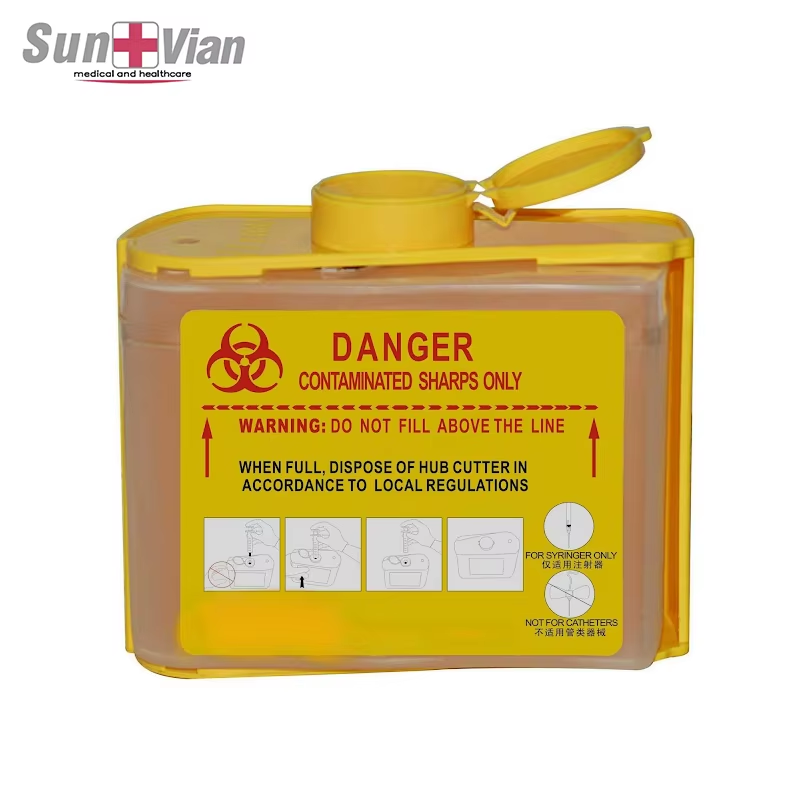
Sizing Smartly: Matching Compact Sharp Container Capacity to Real-World Usage
Fill Limits and Capacity Ranges for Insulin Needles, Lancets, and Vaccination Syringes
Getting the right size container makes all the difference when it comes to avoiding overfilling, which is actually a pretty serious safety issue. According to OSHA data, around 26% of those nasty needlestick injuries happen when people are trying to dispose of sharps. Most small 1 quart containers can handle about 100 insulin needles or roughly 300 lancets. The bigger 1.5 gallon ones will take care of approximately 500 vaccination syringes before needing replacement. Now here's something important to remember: no matter what capacity the container claims, OSHA regulations (specifically 1910.1030) require replacement once they reach three quarters full. For diabetics who need to get rid of lancets on a weekly basis, the smaller half liter containers work well for about 15 to 20 units. On the other hand, clinics running monthly vaccination programs usually find the two liter models much more convenient for their needs.
OSHA-Compliant Sizing: Aligning Compact Sharp Container Volume with Daily Sharps Generation (Home Health vs. Mobile Clinics)
The amount of sharps generated varies quite a bit depending on where they're used. At home, most people only deal with around 5 to 10 needles per week. But picture what happens at a busy mobile clinic - those numbers jump up to over 50 daily! According to OSHA rules for bloodborne pathogens, medical waste containers need to be right there at the point of use. That means container size isn't just about convenience anymore, it's actually essential for proper safety practices. For home healthcare situations, smaller containers holding between half a liter and one liter work fine since they don't need emptying for 30 to 90 days. Mobile units tell a different story though. They typically need larger 2 to 3 liter containers that get emptied weekly. And at really busy locations? Daily replacements become necessary. Some recent data from a 2023 safety review shows why this matters so much. Clinics that tried to get away with too small containers saw triple the number of problems during disposal compared to those with appropriately sized ones. So when picking out containers, matching them to actual workflow patterns makes far more sense than just guessing based on rough volume estimates.
Safety First: Critical Design Features of a Reliable Compact Sharp Container
Puncture Resistance (ASTM D3420) and Failure Modes in Sub-1L Compact Sharp Containers
The ability of a container to resist punctures plays a big role in keeping small sharp containers safe. The ASTM D3420 standard basically tells us what materials need to stand up against needles poking through them. This matters a lot for containers below one liter since they have thinner walls anyway, making them even more at risk if someone fills them past capacity. We've seen containers fail in different ways over time. Sometimes needles go through the sides when disposed of at odd angles. Other times seams just give way under pressure. Recent lab work showed something interesting though. Containers made according to ASTM D3420 standards can handle about three times the force compared to those that don't meet the standard. That makes a real difference in preventing accidental needle sticks both when people are moving these containers around and during regular handling.
Lid Security: Twist-Lock, Slide-Lock, and One-Touch Closures—Efficacy Insights from FDA Adverse Event Data
How secure a container lid stays closed makes all the difference when it comes to preventing exposure risks. Twist locks provide good security but require some hand strength to operate properly. Slide locks let people open containers quickly but sometimes don't fully engage. One touch closures are convenient for fast access but they have problems too — according to FDA reports from 2022, these types accounted for nearly 60% of lid failures seen in portable medical waste units. Good design really matters here. Containers should make noise when they lock properly so staff know they're sealed. They need visible signs if someone tries to tamper with them after closing. And most importantly, whatever mechanism is used needs at least five pounds of force to open. These basic requirements help protect workers from coming into contact with bloodborne pathogens while handling waste materials throughout their day-to-day operations.
User-Centered Design: Ergonomics and Accessibility for Home and Mobile Care
Opening Geometry Matters: Wide-Neck vs. Narrow-Neck Compact Sharp Containers and Error Rates in Elderly or Visually Impaired Users
How something opens makes a big difference when it comes to safely getting rid of needles, especially for seniors or people who have trouble seeing well. Research on how people actually use these things shows that containers with wider necks cut down on mistakes during disposal by about 30% compared to those narrow ones we often see. The bigger opening means folks don't have to aim so precisely, which helps prevent accidental needle sticks for anyone struggling with hand movement issues or poor eyesight. For best results, look at designs where the opening is at least three inches across. This lets most people handle them easily with just one hand. Such thinking fits right into making products accessible for everyone. It takes away those pesky physical obstacles that stop proper usage, whether someone is at home managing their own health or out somewhere needing medical attention but lacking full control over their hands.
Regulatory Confidence: OSHA and CDC Guidance for Compact Sharp Container Use Outside Clinical Settings
The rules from OSHA and CDC leave little room for interpretation when it comes to using compact sharp containers in places like home healthcare visits or mobile clinics. These guidelines insist on containers made from materials that resist punctures, require obvious labels so everyone knows what's inside, and demand lids that stay securely closed even when containers are at maximum capacity. The goal? To stop needlestick injuries and limit exposure to bloodborne pathogens during routine tasks involving things like insulin needles, lancets, or those used for vaccinations away from hospitals. There are real consequences for not following these rules too. OSHA can hit violators with fines as high as $15,625 per incident according to their Bloodborne Pathogens Standard. And let's not forget the CDC reports indicate that correct container usage cuts down on sharps injuries by around three quarters in settings outside regular hospitals. For anyone working with sharps in these environments, sticking to these standards isn't just about avoiding trouble with regulators—it actually makes a difference in keeping both patients and healthcare workers safe.
FAQ
What is the recommended replacement level for compact sharp containers?
The OSHA regulations specify that containers should be replaced once they are three quarters full, regardless of their claimed capacity.
What are the risks of using undersized sharp containers?
Using undersized containers often leads to overfilling, which can increase the risk of needlestick injuries and exposure to bloodborne pathogens.
Why does lid security matter for sharp containers?
Lid security is crucial to prevent exposure risks. Secure lids help ensure that containers remain safely closed, preventing the risk of accidental exposure to sharps waste.
How does opening geometry affect sharp container usage?
Wide-neck openings in sharp containers reduce errors during disposal, especially for elderly individuals or those with visual impairments, as they reduce the need for precise aiming.
Table of Contents
- Sizing Smartly: Matching Compact Sharp Container Capacity to Real-World Usage
- Safety First: Critical Design Features of a Reliable Compact Sharp Container
- User-Centered Design: Ergonomics and Accessibility for Home and Mobile Care
- Regulatory Confidence: OSHA and CDC Guidance for Compact Sharp Container Use Outside Clinical Settings
- FAQ